2026-10-16 ·
What Affects the Cost of Cleaning Soot from HVAC Systems in Orange County Homes
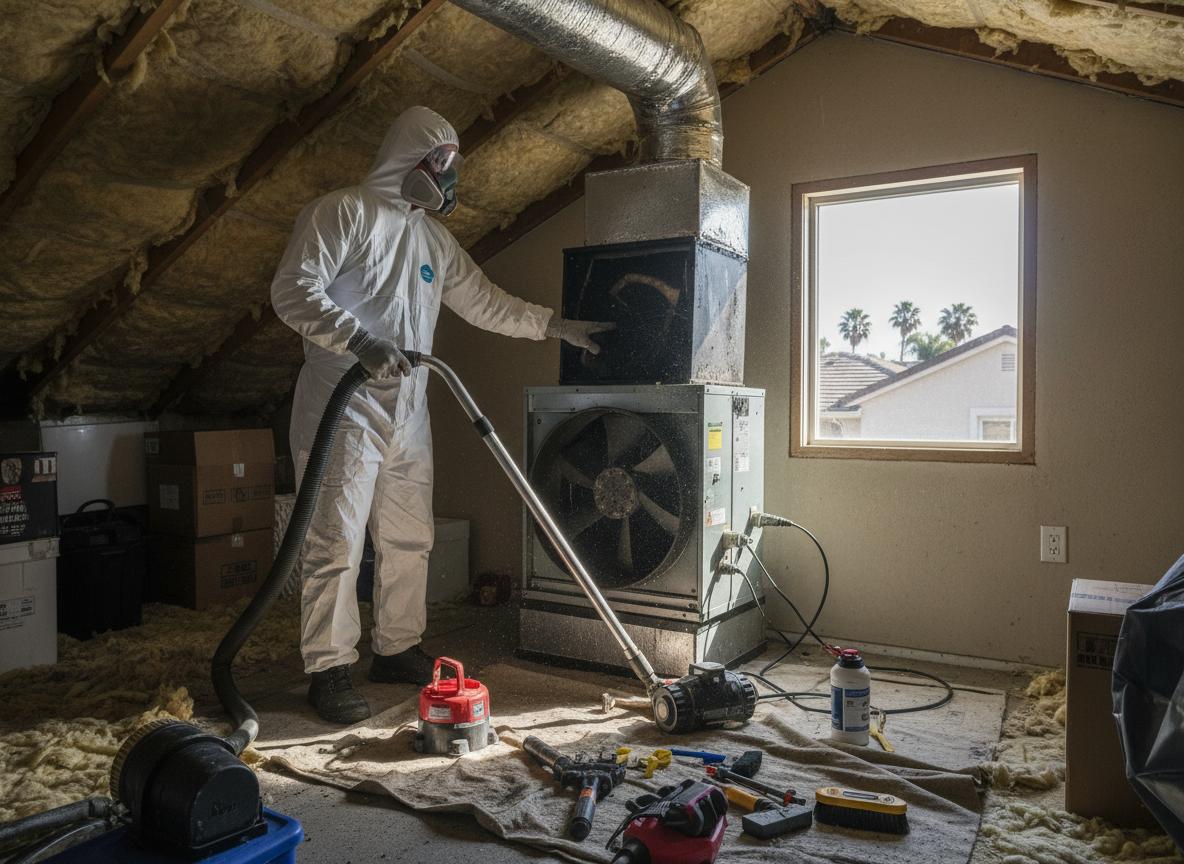
The cost of cleaning soot from HVAC systems in Orange County homes is shaped primarily by the volume of ductwork, the depth of soot infiltration into coils and insulation, and the time required for safe access in older homes common throughout Midway City and nearby Westminster.
HVAC System Size and Layout in Local Homes
Midway City features many single-story ranch homes built in the 1960s and 1970s with compact but often poorly sealed duct runs that trap fine soot particles. Larger systems serving 1,800-square-foot homes require more labor hours to disassemble registers, clean trunk lines, and treat evaporator coils than smaller setups in Garden Grove apartments. Technicians must map every branch because soot travels through return air paths and settles unevenly, increasing the number of access points needed. Homes with original flex duct instead of rigid metal add extra steps since the material cannot be agitated the same way without tearing.
Soot Composition and Penetration Depth
Soot from kitchen or electrical fires common in Orange County produces different particle sizes that affect cleaning methods and duration. Oily residues from cooking fires bond to metal surfaces and require repeated HEPA vacuuming plus solvent wipes, while dry smoke from structural fires penetrates fiberglass insulation that must often be removed entirely. In Midway City’s mild Mediterranean climate, temperature swings between day and night cause condensation inside ducts that can re-activate acidic soot and corrode coils over several weeks if not addressed promptly. This changes the job from a single-day service to staged treatments that protect equipment longevity.
Access Challenges and Duct Condition
Older homes in the area frequently have ducts routed through crawl spaces or low attics with limited entry points, forcing technicians to create additional openings that add to labor. Corrosion or previous modifications in 30- to 50-year-old systems slow progress because fragile sections must be handled carefully to avoid further damage. Each register and boot needs individual inspection because soot migrates differently than smoke odor. When water damage remains after firefighters extinguish a blaze, crews coordinate with handling water damage left behind after firefighters extinguish a blaze protocols before HVAC work begins.
Climate and Seasonal Timing Effects
Orange County’s mild Mediterranean climate means HVAC systems run year-round for both heating and cooling, circulating soot continuously until cleaned. Summer months see higher demand because residents close homes tightly against heat, concentrating particles inside ducts. Winter brings occasional Santa Ana winds that can push outdoor smoke indoors through unsealed returns. Scheduling during shoulder seasons can reduce wait times, but emergency calls still occur after structure fires regardless of weather. Technicians factor in these patterns when estimating how many days a full cleaning will take in a given neighborhood.
Coordination with Related Restoration Steps
Soot removal rarely happens in isolation. Crews often work alongside teams performing soot removal on surfaces and contents to prevent re-contamination once the HVAC restarts. In Westminster homes, for example, attic insulation replacement may coincide with duct cleaning when fire damage reaches upper levels. Proper sequencing avoids moving cleaned air through still-contaminated spaces. Homeowners should also review smoke remediation plans to confirm the HVAC portion aligns with whole-house clearance testing standards used locally.