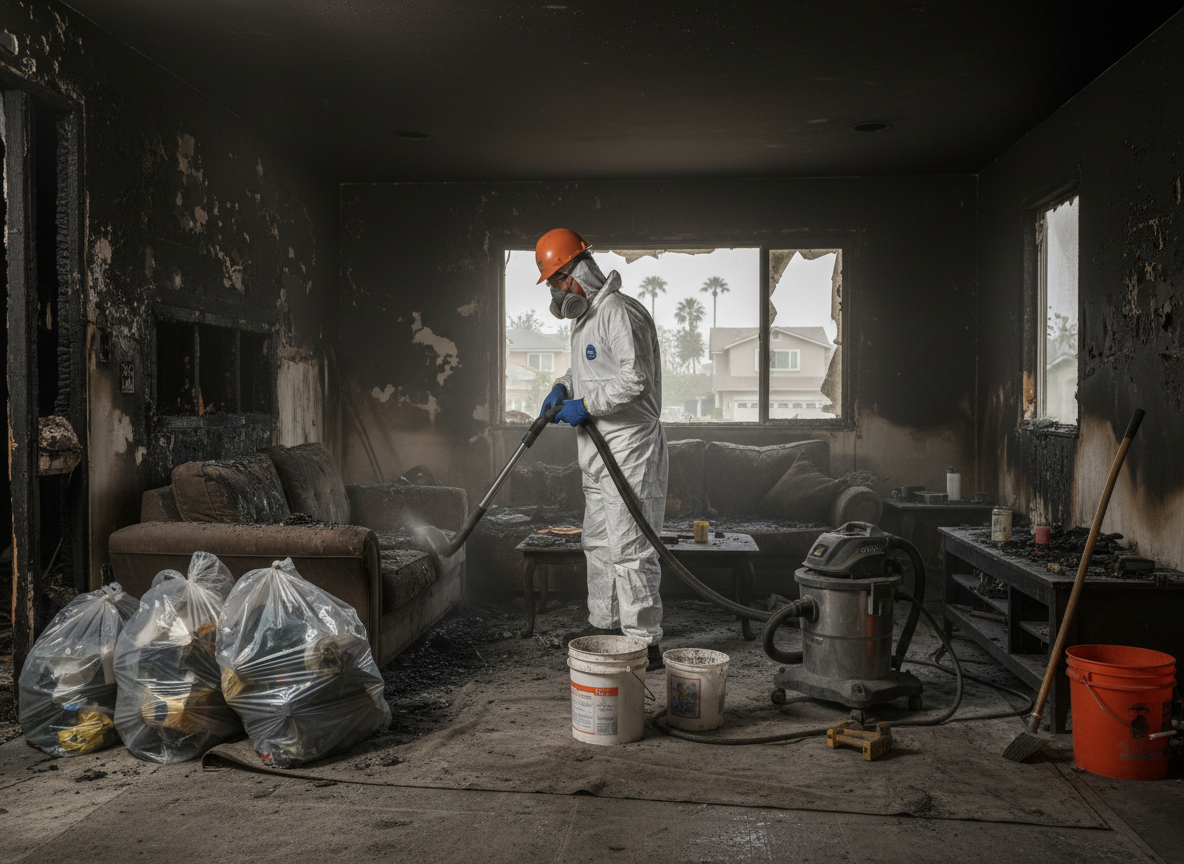
Midway City homes built mid-century often feature stucco exteriors and plaster interiors that trap fine soot particles after even small kitchen or electrical fires. Our crews start by mapping smoke migration paths through HVAC ducts and attic spaces common in the flat terrain between Beach Boulevard and the 405 corridor. Mild Mediterranean humidity keeps residue from drying fully, so we use specialized vacuum systems and pH-neutral cleaners to lift bonded carbon without etching surfaces.
Garden Grove and Westminster border properties share similar lot sizes and older wiring, which means hidden charring behind walls frequently extends cleanup beyond the obvious burn site. We isolate affected rooms with negative air machines to prevent cross-contamination into unaffected living spaces, then remove and dispose of porous materials like insulation and carpet padding that absorb odors permanently. Every job includes clearing ash from rain gutters and exterior concrete, since coastal breezes can redistribute particles days after the initial event.
Cleanup timelines stretch when fires occur during the drier fall months because wind can carry smoke farther into neighboring blocks. We document every layer removed so homeowners can show insurers the full scope without delays. Final steps include ozone or hydroxyl treatment calibrated for the smaller square footage typical of Midway City single-story residences.
Technician insight
In Midway City the thing that catches most people out with fire damage clean up is how the mild Mediterranean humidity keeps soot stuck to the older plaster walls and stucco around Beach Blvd addresses, so a quick wipe never gets it all and you end up with lingering odor weeks later.
Kitchen Fire Smoke Spread
A small stovetop fire in a single-story Midway City home sent smoke through the central HVAC into two bedrooms. We found heavy soot on ceiling textures and inside ductwork. After containment, vacuum extraction, and hydroxyl treatment the home passed air tests and the family moved back in without odor complaints.
How it works
- 1
Site Assessment
Walk every room and attic to locate all smoke paths and test surface pH levels.
- 2
Containment Setup
Seal doorways and run negative air to stop soot from spreading into clean areas.
- 3
Debris and Soot Removal
Vacuum and wipe non-porous surfaces, then bag and haul away charred or saturated materials.
- 4
Odor Neutralization
Apply targeted air treatment and ventilate until readings return to normal.
- 5
Final Walk-Through
Review cleared spaces with the homeowner and note any items needing separate restoration.
Pricing
Cost depends on square footage affected, number of rooms, and whether HVAC or insulation requires removal.