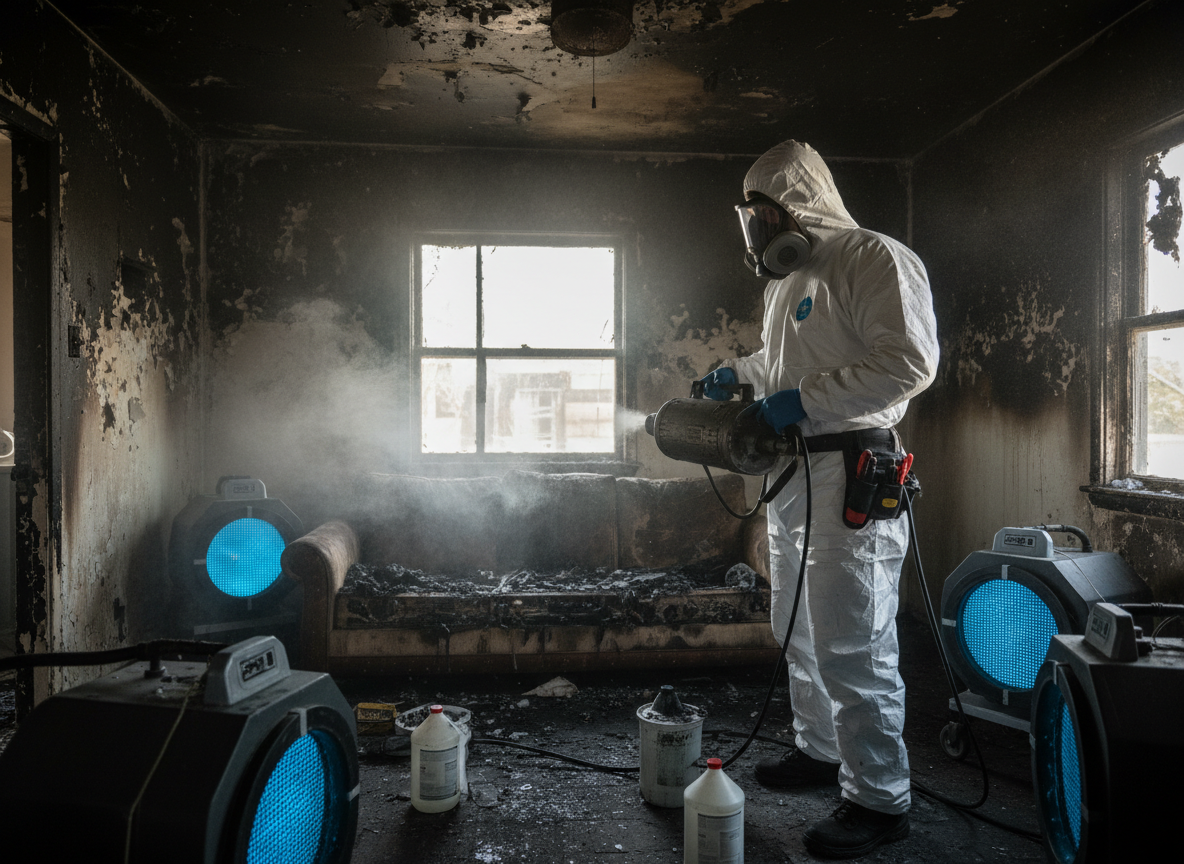
Smoke from structure fires penetrates drywall, insulation, and the HVAC systems common in Midway City homes built from the 1950s onward. These single-story ranches and stucco residences often have shared ductwork that carries odors into every room, even when the fire was contained to one area. In Orange County’s mild Mediterranean climate, residual moisture from suppression water combines with coastal humidity to set odors deeper into porous materials than in drier inland counties. Standard cleaning fails here because it leaves behind particulates lodged in plaster and underfloor cavities.
Effective odor removal requires sequential treatments matched to the fire’s fuel type and the home’s construction. Thermal fogging reaches into wall voids while ozone generators break down molecules on non-porous surfaces. Air scrubbing with HEPA filtration runs continuously to capture loosened particles before they resettle. Homes bordering Westminster frequently need extra attention to attic insulation where embers and soot travel along shared rooflines. Garden Grove properties with slab foundations require separate treatment of subfloor cavities that trap water and smoke residue.
Homeowners in Midway City often attempt surface cleaning first, which masks odors temporarily but allows them to return when temperatures rise. Proper sequencing starts with source removal, followed by sealing porous surfaces only after verification that readings have dropped below detectable levels. Skipping the HVAC cleaning step leaves odors circulating for months. Local building practices from the post-war era mean many Midway City homes have knob-and-tube wiring or early aluminum ducting that can complicate access and increase treatment time.
Technician insight
In Midway City, the thing that catches most people out with Odor removal after fire is how smoke travels through the shared attic spaces and single-wall construction common in homes along Beach Blvd. The mild Mediterranean climate keeps humidity high enough that odors set into drywall and carpet padding faster than homeowners expect. Skipping the duct cleaning step is the mistake that brings us back weeks later.
Kitchen Fire Odor Spread
A contained kitchen fire in a 1960s Midway City ranch left smoke odors throughout the living areas and into the attic. Inspection showed residue had entered the HVAC system serving both the home and an attached garage. We performed source removal, fogged wall cavities, cleaned the ducts, and ran air scrubbers until readings cleared. The family returned without recurring smells.
How it works
- 1
Site Assessment
Technicians inspect all affected rooms, HVAC runs, and attic spaces to map odor pathways in the specific Midway City home.
- 2
Source Removal
Burned materials and heavily contaminated insulation are removed before any odor treatment begins.
- 3
Odor Neutralization
Thermal fogging, ozone application, and hydroxyl generators are applied in sequence based on material types and fire fuel.
- 4
Air Scrubbing and Verification
Continuous HEPA filtration runs until independent air sampling confirms odor levels are eliminated.
Pricing
Pricing varies by square footage, smoke penetration depth, and whether HVAC cleaning is required; upfront quotes provided after inspection.