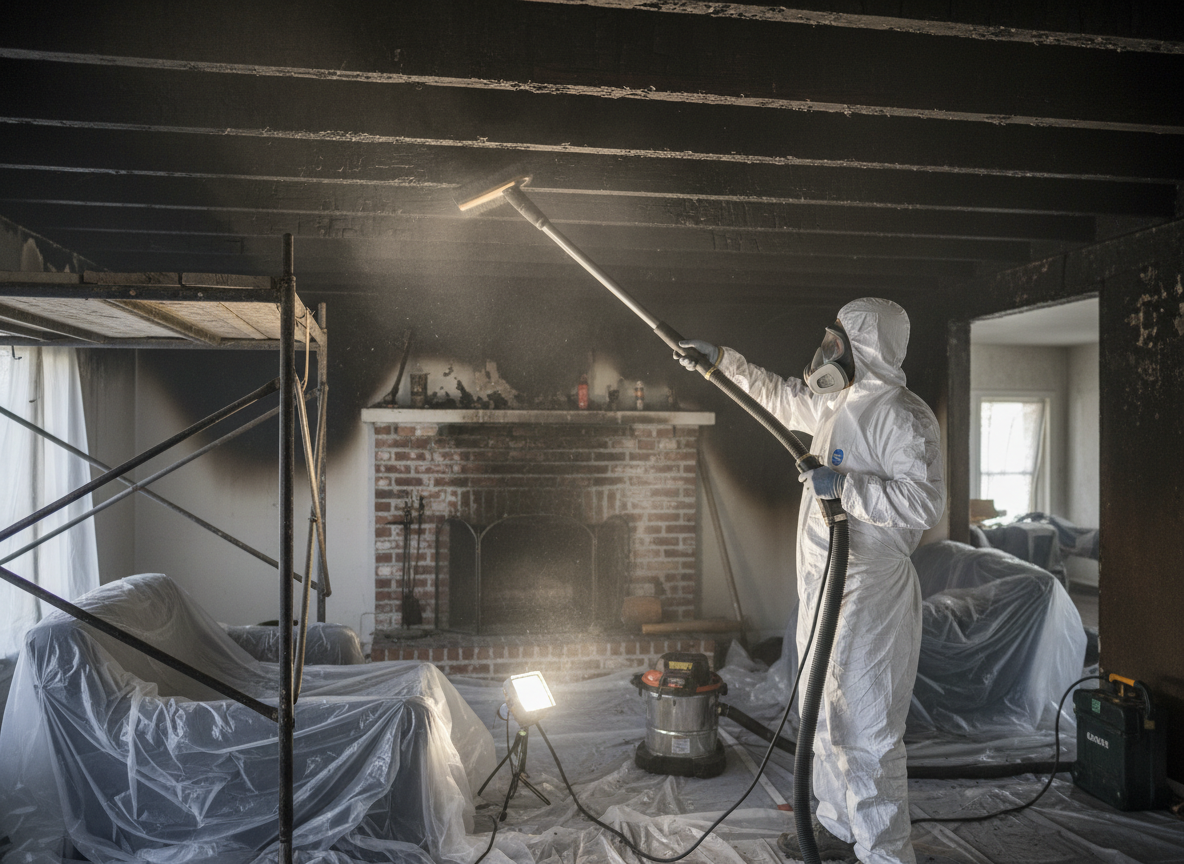
Soot from structure fires in Midway City often mixes with drywall dust and insulation fibers common in homes built through the 1970s. These particles embed quickly into textured ceilings and carpet padding because the area's mild Mediterranean climate keeps indoor humidity stable year-round, slowing natural settling. Technicians start with negative-air machines to prevent migration into unaffected rooms, then test surfaces with pH strips to choose between alkaline or solvent-based sponges. Skipping this step leaves alkaline residue that attracts new dirt within weeks.
HVAC systems in Garden Grove and Westminster border homes frequently pull soot into ducts during the initial burn. Restoration crews isolate registers, pull registers for off-site cleaning, and run HEPA-filtered air scrubbers for 48 hours minimum. Older flex ductwork tears easily under aggressive brushing, so crews use compressed-air wands instead. Any missed residue later oxidizes and produces persistent odors that standard deodorizers cannot neutralize.
Porous materials such as acoustic ceiling tiles and unsealed concrete slabs in Midway City garages require different protocols than non-porous tile. Technicians apply specialized encapsulants only after vacuuming to the point that white cloths show no transfer. Local building codes require documentation of clearance testing before re-occupancy, and crews photograph each stage so homeowners can verify the work themselves.
Technician insight
In Midway City, the thing that catches most people out with Soot removal is how the mild Mediterranean climate lets fine soot stay suspended longer inside older stucco homes with single-pane windows, so it travels through wall cavities and re-deposits on clean surfaces if containment is rushed.
Electrical Fire Residue Spread
A bedroom electrical fire in a Midway City home sent soot through open doors into the hallway. We found residue inside the return-air duct because the 1960s HVAC had no filter. We sealed the system, cleaned registers separately, and ran scrubbers until cloths stayed clean. The family moved back without odor complaints.
How it works
- 1
Initial Assessment
Technicians inspect all affected rooms, test surfaces for soot type, and map HVAC paths in the Midway City property.
- 2
Containment Setup
Plastic barriers and negative air machines isolate the work zone to keep particles from reaching Westminster-adjacent living areas.
- 3
Surface Cleaning
HEPA vacuums and chemical sponges remove residue from walls, ceilings, and contents without abrading finishes.
- 4
Air And Odor Treatment
Air scrubbers run until readings drop, followed by odor-neutralizing agents matched to the soot chemistry.
- 5
Final Verification
White-cloth tests and visual inspection confirm surfaces are clean before barriers come down.
Pricing
Pricing varies by soot density, number of rooms, and HVAC involvement; upfront quotes follow an on-site inspection.