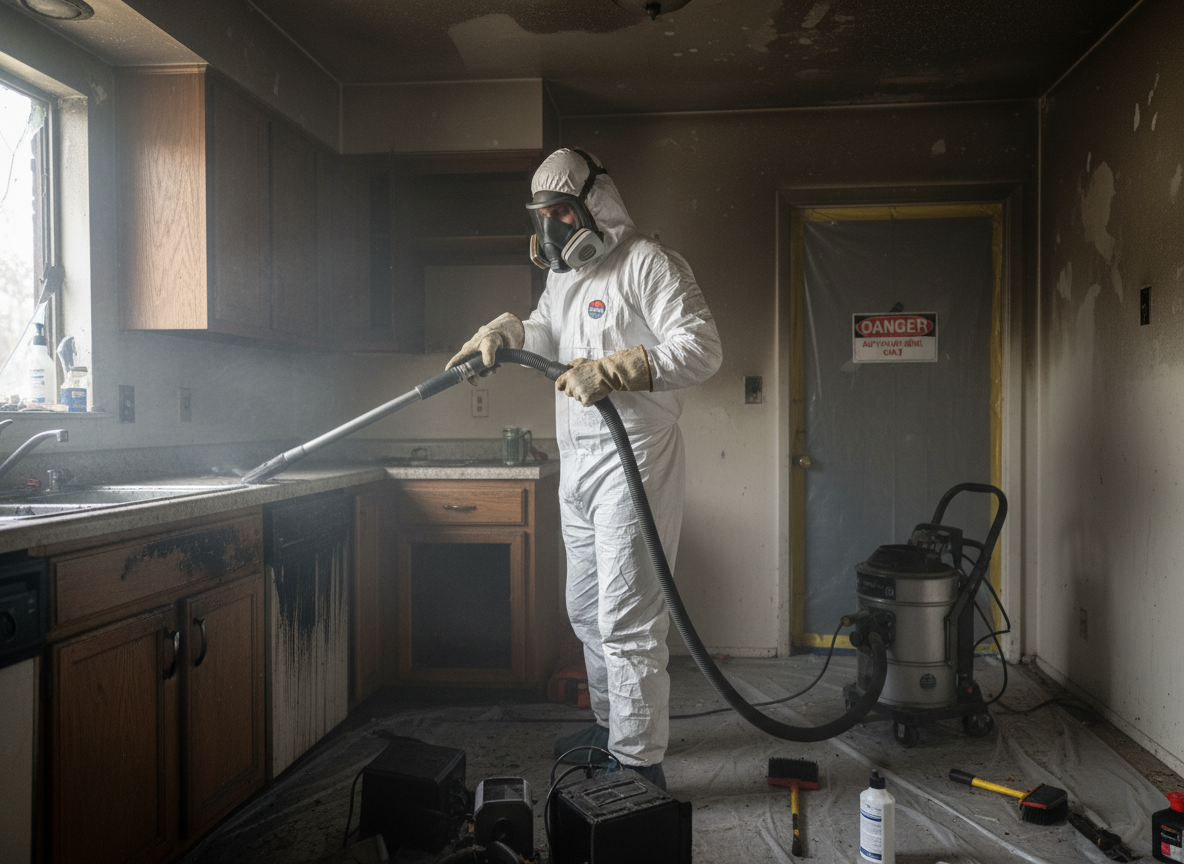
Smoke from structure fires in Midway City penetrates porous materials such as drywall, insulation, and wood framing found in many homes built before 1980. The mild Mediterranean climate keeps humidity moderate year-round, allowing acidic smoke particles to remain active longer and etch surfaces if not neutralized promptly. Technicians must address both visible soot on ceilings and hidden deposits inside wall cavities and HVAC ducts that serve Garden Grove and Westminster border properties.
Edge cases include smoke migration through shared attics in older duplexes along Beach Boulevard, where negative pressure from fire suppression can pull particulates into adjacent units. Code requirements in Orange County often mandate verification that combustion byproducts have been removed before reoccupancy, especially when electrical wiring or plumbing has been exposed. Incomplete cleaning here frequently leads to recurring odors during the first Santa Ana wind events of the season.
Specialized equipment such as air scrubbers with HEPA and activated carbon filters is required to capture submicron particles that standard vacuums miss. In Midway City’s flat terrain, smoke tends to pool at lower levels, increasing saturation in flooring and baseboards compared to hillside homes. Proper sequencing prevents cross-contamination between living spaces and unaffected rooms during the multi-day process.
Technician insight
In Midway City, the thing that catches most people out with Smoke remediation is how the mild Mediterranean climate lets smoke settle deep into the older stucco and plaster homes along Beach Blvd, especially in shared attics that connect to Garden Grove properties; homeowners often miss the wall cavities and get recurring odors the first time the heat kicks on.
Smoke Migration in Midway City Duplex
A kitchen fire sent smoke through a shared attic into the neighboring unit. Inspection revealed heavy residue inside HVAC ducts and insulation that standard cleaning had missed. We isolated the systems, performed cavity cleaning and neutralization, then verified clearance so both households could return without odor complaints.
How it works
- 1
Initial Assessment
Inspect all rooms, attic spaces, and HVAC systems to map smoke migration patterns specific to Midway City construction.
- 2
Containment Setup
Isolate affected zones with plastic barriers and negative air machines to protect unaffected areas in neighboring Westminster homes.
- 3
Surface Cleaning
Apply pH-neutralizing agents to walls, ceilings, and contents followed by HEPA vacuuming of settled residues.
- 4
Odor Neutralization
Deploy ozone or hydroxyl generators and thermal fogging to reach embedded smoke in porous materials.
- 5
Final Verification
Conduct clearance testing and walk-through to confirm no lingering odors before returning the property to the owner.
Pricing
Costs depend on square footage affected, depth of smoke penetration into cavities, and whether HVAC cleaning is required.