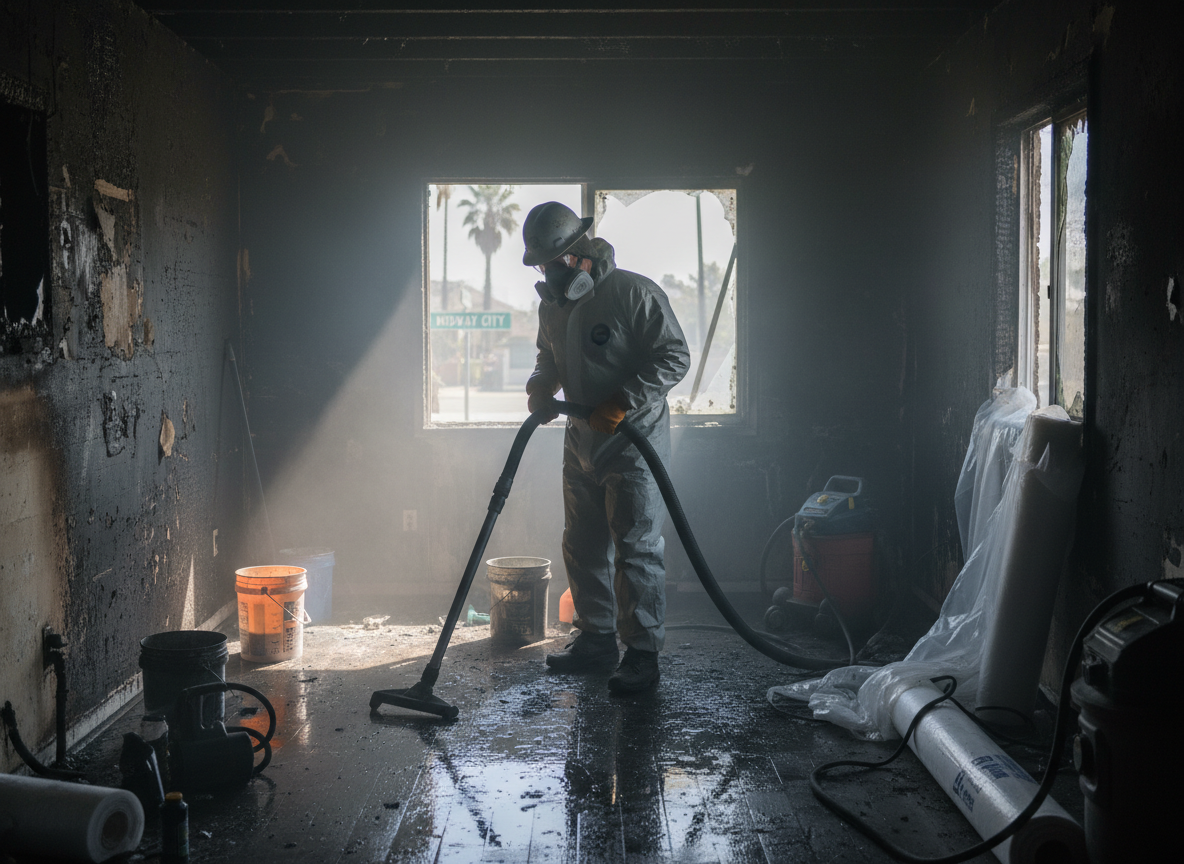
Midway City homes, often built in the 1950s through 1970s with wood framing and older electrical systems, require careful assessment after fire events because hidden charring can travel through attics and wall cavities common in the area's ranch-style housing stock. The mild Mediterranean climate means ash and soot remain dry longer, allowing quicker containment but also increasing the risk of wind-driven ember re-ignition during Santa Ana conditions that affect Orange County neighborhoods. Restoration crews must account for drywall types and insulation materials typical in Garden Grove and Westminster border properties to prevent lingering odors from settling into HVAC ducts.
Edge cases in Midway City include fires starting in detached garages or carports that spread to main structures through shared fencing, requiring selective demolition to preserve original stucco exteriors without compromising load-bearing walls. Smoke residue on concrete slabs and tile floors demands pH-neutral cleaning agents to avoid etching surfaces found in many local kitchens and bathrooms. Crews also check for water intrusion from suppression efforts, as even brief rainfall can reactivate corrosion in older copper plumbing runs beneath slab foundations.
Code considerations involve verifying that repaired electrical panels meet current Orange County standards when fire damage reaches service entrances, and ensuring ventilation paths are cleared to prevent moisture buildup in post-fire environments. Homeowners should avoid running HVAC systems until ducts are inspected, since soot particles from typical residential fires can recirculate through single-story layouts prevalent along Beach Boulevard.
Technician insight
In Midway City, the thing that catches most people out with Emergency fire damage restoration is how quickly smoke travels through the open attic spaces in 1960s ranch homes along Beach Boulevard, especially when the mild climate keeps everything dry and allows fine soot to settle deep into insulation without obvious surface signs until weeks later.
Garage fire spreading to kitchen
A fire started in a detached garage on a Midway City side street and traveled through shared fencing into the kitchen wall. We found extensive charring in the attic joists and heavy smoke residue throughout the single-story layout. Selective demolition removed only the compromised sections while preserving the original stucco, followed by full soot cleaning and odor treatment. The home was returned to the owners after three weeks with no recurring smells.
How it works
- 1
Initial Assessment
Technicians arrive within hours, document visible damage, test for hidden smoke migration through walls and attics, and secure the property against further weather exposure.
- 2
Containment and Safety
Set up barriers to isolate affected zones, shut down HVAC if needed, and remove immediate hazards such as unstable drywall or electrical risks.
- 3
Soot and Residue Removal
Apply specialized cleaning methods to surfaces, contents, and ductwork while monitoring air quality throughout the Midway City property.
- 4
Drying and Odor Treatment
Deploy air movers and dehumidifiers to address any water from suppression, followed by thermal fogging or ozone treatment to neutralize embedded smoke odors.
- 5
Rebuild and Final Verification
Perform necessary structural repairs, replace damaged materials, and conduct clearance testing before returning the home to the owner.
Pricing
Costs depend on fire size, affected square footage, and whether contents require separate handling; upfront assessments are provided before any work begins.