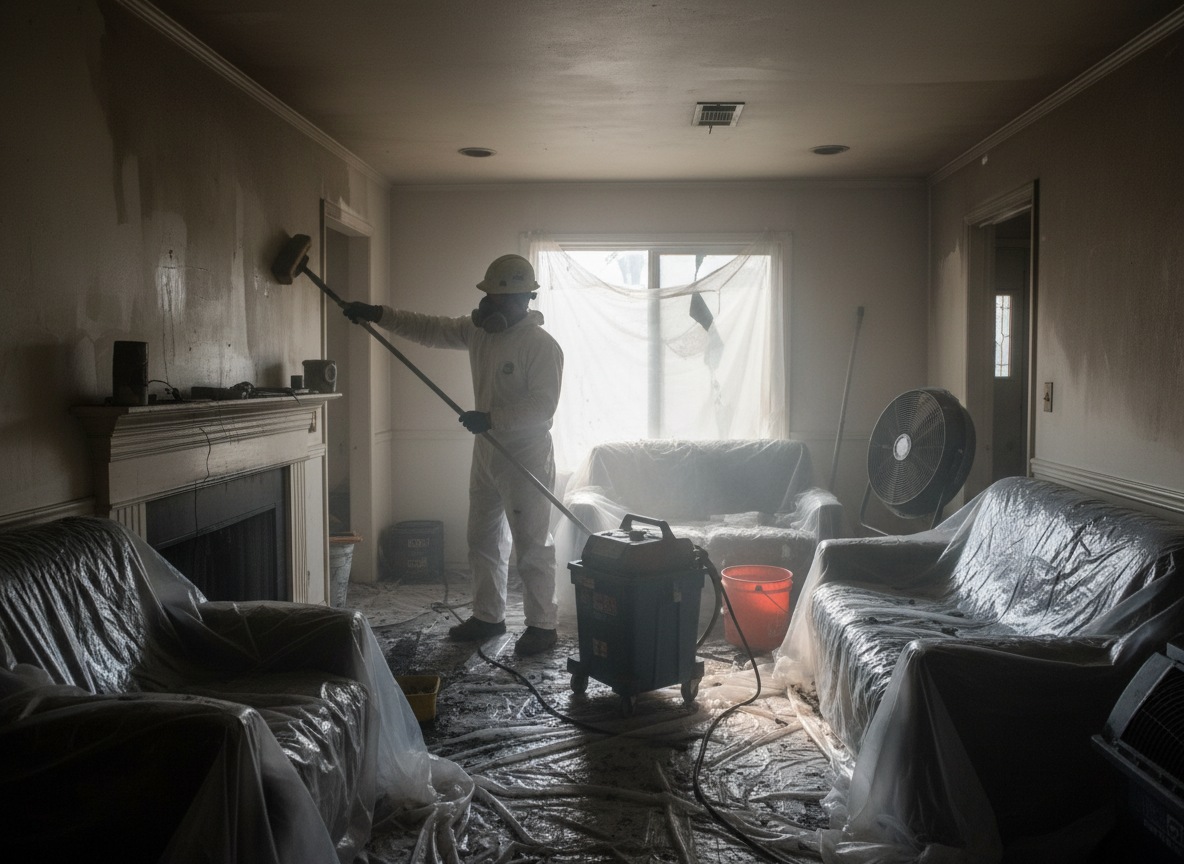
Smoke from residential fires in Midway City travels quickly through the open floor plans and shared attics common in homes built along Beach Boulevard and toward Garden Grove. Fine soot particles settle into textured ceilings, popcorn finishes, and the fiberglass insulation used in many 1960s-era properties. Standard wiping leaves residue that later off-gasses when summer temperatures rise, so technicians use dry-cleaning sponges followed by HEPA vacuuming before any sealing or painting occurs.
The mild Mediterranean climate here means low humidity most of the year, allowing smoke odors to remain trapped in porous materials such as drywall, carpet padding, and drapery for weeks. In neighborhoods bordering Westminster, HVAC systems often pull smoke through ductwork into bedrooms that never saw direct flame. Full restoration requires isolating and cleaning those runs, then confirming clearance with an odor meter rather than relying on scent alone.
Homeowners sometimes attempt to clean only visible surfaces after a kitchen or electrical fire. This approach fails when smoke has migrated into wall cavities or under cabinets, later staining new paint or finishes. Proper work includes removing and cleaning or discarding affected contents, then documenting the process for insurance adjusters who serve the Midway City and Garden Grove area.
Technician insight
In Midway City, the thing that catches most people out with smoke damage restoration is how the mild Mediterranean climate lets fine soot embed into the popcorn ceilings and shared attics of older homes near Beach Blvd, so skipping full HVAC cleaning almost always brings the odor back within weeks.
Kitchen Fire Smoke in Border Home
A Midway City residence near the Westminster line had smoke travel through the attic after a stove fire. Inspection showed soot in bedroom ducts and insulation. Technicians isolated the system, performed dry cleaning and duct decontamination, then treated for odors. The family returned without residual smells.
How it works
- 1
Initial Assessment
Inspect all affected rooms, attic spaces, and HVAC runs to map smoke migration paths.
- 2
Containment and Safety
Set up negative air and seal unaffected areas before starting soot removal.
- 3
Soot Removal
Apply dry-cleaning methods and HEPA filtration to surfaces and contents.
- 4
Odor Neutralization
Treat remaining odors with thermal fogging or ozone in contained zones.
- 5
Final Clearance
Test with instruments and return the property ready for repairs or occupancy.
Pricing
Pricing depends on smoke spread, materials affected, and HVAC involvement; upfront quote provided after inspection.