2026-10-16 ·
Handling Water Damage Left Behind After Firefighters Extinguish a Blaze
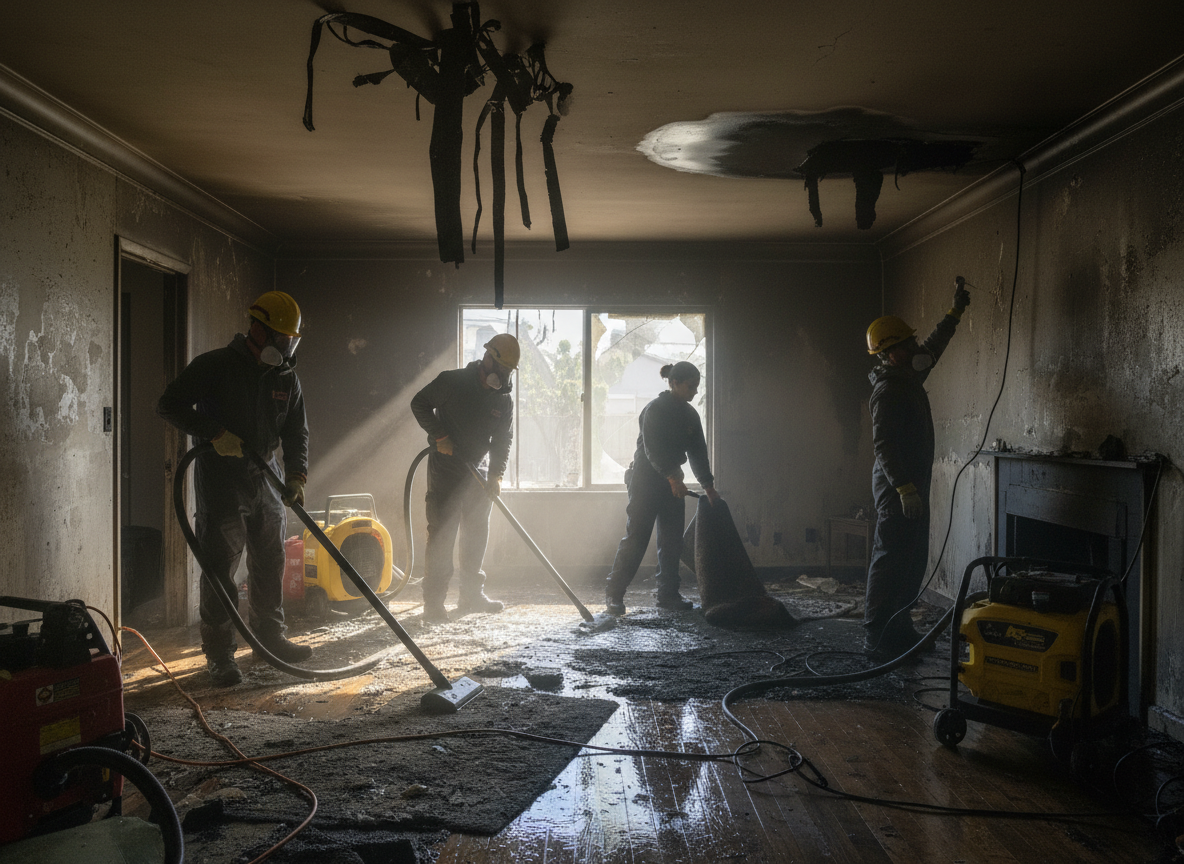
Water left behind after firefighters extinguish a blaze in Midway City must be extracted and dried within 24 to 48 hours to limit mold growth and further structural harm in the area's older single-family homes. This timeline holds because the mild Mediterranean climate keeps humidity moderate most of the year, yet still allows trapped moisture to linger in wall cavities and subfloors common in Midway City and nearby Westminster builds from the 1950s through 1970s.
Immediate Extraction Steps
Begin by removing standing water with truck-mounted pumps rated for at least 200 gallons per minute, then follow with moisture meters to locate hidden pockets behind drywall and under cabinets. In Orange County homes, firefighters often use 1,500 to 3,000 gallons during a typical kitchen or bedroom response, so crews must target both visible pools and water that has wicked into insulation. Homeowners in Garden Grove and Midway City report faster recovery when they avoid walking on saturated floors that can collapse under weight. Professional teams document every step with photos for insurance adjusters before any demolition begins.
Drying Techniques for Local Conditions
Once bulk water is gone, industrial air movers and dehumidifiers rated for 70-pint daily removal run continuously for 3 to 5 days in Midway City's typical 60 to 75 degree temperatures. The mild Mediterranean climate reduces evaporation speed compared with hotter inland zones, so technicians place sensors in multiple rooms to confirm moisture levels drop below 15 percent before stopping equipment. Homes near Beach Boulevard often have slab-on-grade foundations that trap water longer, requiring perimeter drilling for targeted drying. This process prevents the musty odors that later require separate smoke remediation work.
Addressing Hidden Damage in Older Homes
Midway City housing stock frequently features lath-and-plaster walls and original hardwood that absorb water differently than modern materials, so crews cut inspection holes every 4 to 6 feet along baseboards to verify drying. Local building code considerations when replacing fire-damaged drywall in Midway City guide permit requirements for any structural cuts. Electrical outlets and HVAC returns near the fire origin need separate checks because residual moisture can corrode wiring over weeks. Teams in Westminster and Garden Grove routinely find water that traveled 20 to 30 feet through ceiling joists, requiring ceiling removal in adjacent rooms.
Coordination With Fire and Flood Restoration
Water damage after a blaze overlaps with smoke and soot issues, so restoration follows a combined fire and flood restoration protocol that sequences extraction before soot cleaning. 24 hour fire restoration teams based at 15142 Beach Blvd remain available around the clock to begin pumping the same day a call arrives. This integrated approach reduces total project time by 30 to 40 percent compared with separate contractors handling water then fire residue. Final clearance testing measures both moisture and airborne particulates before homeowners return.
Long-Term Monitoring and Prevention
After equipment removal, weekly moisture checks for the next two weeks catch any rebound in wall cavities that the mild climate can mask. Owners in Midway City should inspect attics and crawl spaces seasonally because even small leaks from prior suppression water can reappear during rare heavy rains. Documenting all repairs supports future insurance claims and helps neighbors on the same block avoid similar secondary losses.