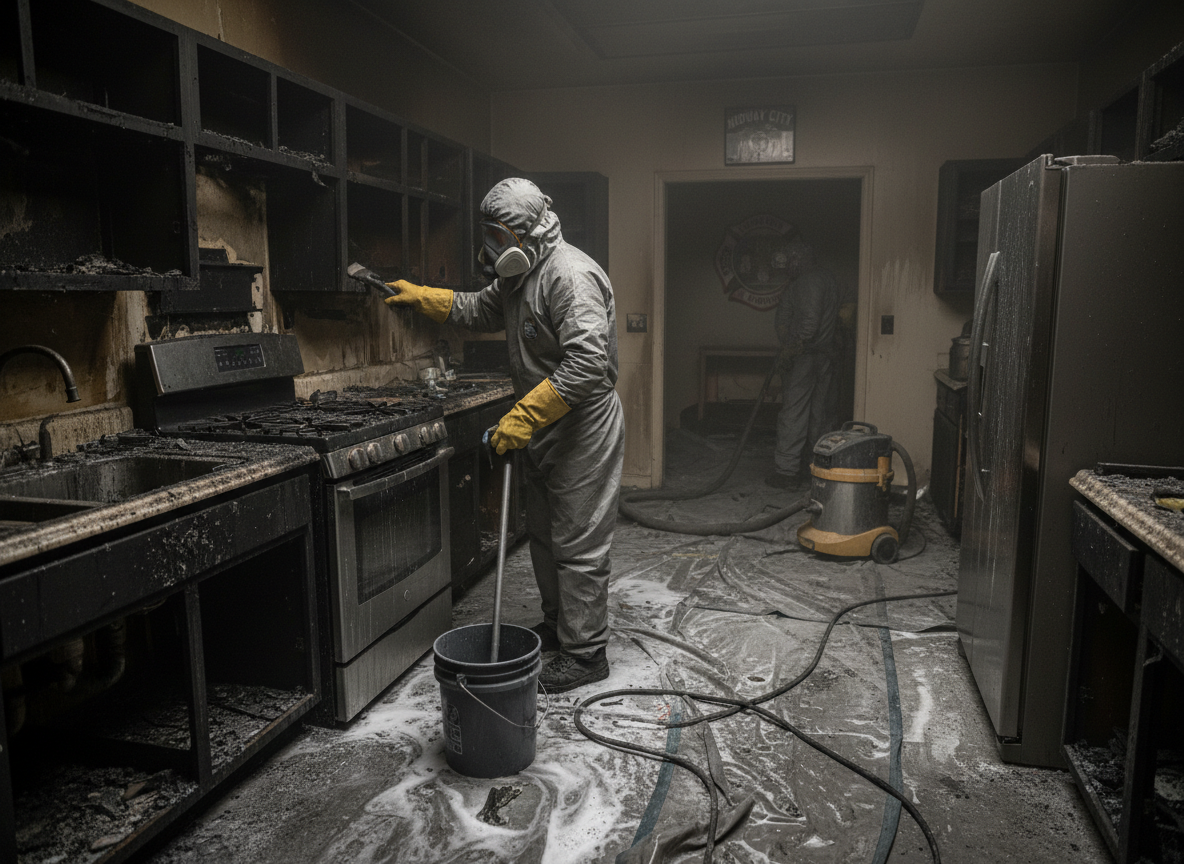
Kitchen fires in Midway City often start from grease or unattended cooking and quickly coat cabinets, counters and HVAC returns with oily soot that standard cleaning cannot remove. The mild Mediterranean climate keeps most homes sealed much of the year, allowing smoke to linger and penetrate drywall, insulation and ductwork in the older tract houses common along Beach Boulevard and nearby Westminster. Technicians must test surfaces for pH levels and use specialized degreasers before sealing or repainting to prevent recurring odors.
Edge cases include hidden residue inside range hoods, behind appliances and in the joints of laminate or tile backsplashes typical of 1960s-1980s Garden Grove border homes. Failing to address these areas leads to persistent smells when the next Santa Ana wind event drops humidity. Crews also check for code compliance on electrical and gas lines after any fire that reached outlets or stove connections, since local inspectors require documented clearance before occupancy.
Homeowners should avoid running HVAC or opening windows immediately after a kitchen fire, as this spreads fine particles throughout the single-story ranch homes prevalent in Midway City. Professional teams use air scrubbers and negative air machines sized for these smaller floor plans, then verify clearance with moisture meters and odor detection before final walkthrough.
Technician insight
In Midway City the thing that catches most people out with kitchen fire cleanup is how quickly grease soot travels through the shared wall cavities and single-duct HVAC runs in the 1960s tract homes along Beach Blvd, especially when the mild climate keeps windows shut for weeks at a time.
Grease Fire Residue in Beach Blvd Kitchen
A kitchen grease fire coated cabinets and sent smoke into the return vents of a Midway City home near Westminster. Inspection showed residue inside the duct joints and behind the range. Crews performed targeted degreasing and HVAC cleaning then verified clearance before the family returned.
How it works
- 1
Initial Assessment
Technicians arrive 24/7, document the affected kitchen zones, and identify smoke migration paths through the home's layout.
- 2
Containment and Safety
Areas are sealed to prevent cross-contamination while checking electrical and gas lines for hidden damage.
- 3
Soot and Residue Removal
Specialized degreasers and tools clean cabinets, appliances, HVAC returns and surfaces without spreading oily particles.
- 4
Deodorization and Clearance
Air scrubbing and sealing eliminate odors, followed by verification that the space meets habitability standards.
Pricing
Cost depends on square footage affected, HVAC involvement and surface materials; upfront quotes provided after inspection.