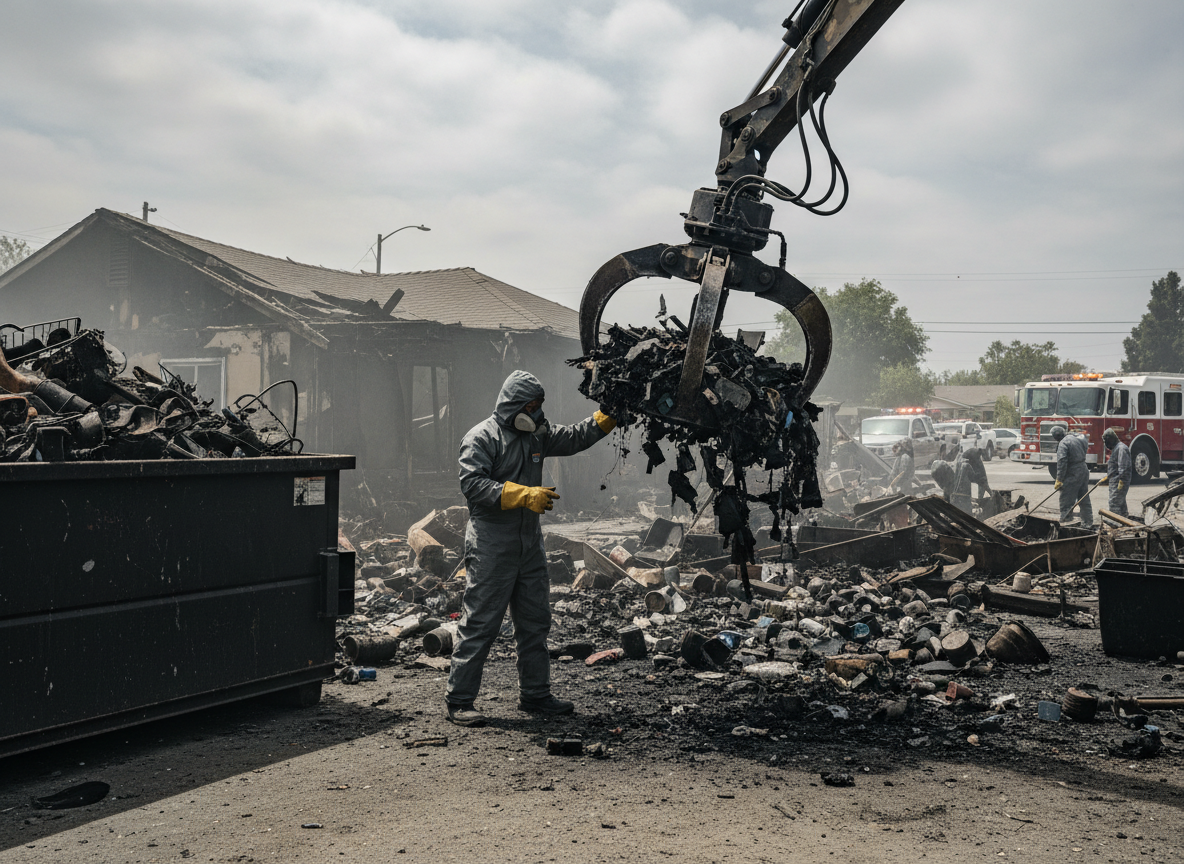
Hoarding cleanup after fire in Midway City requires careful separation of charred debris from decades of stored items common in the area's post-war ranch homes. Soot penetrates cardboard boxes, fabric piles and paper stacks that often line hallways and garages in these properties. Technicians must map exit paths first because blocked doors and windows are frequent in hoarded residences near Beach Boulevard. Mild Mediterranean weather means outdoor staging of sorted materials can proceed year-round, yet evening humidity still allows wet soot to set into porous surfaces if not addressed within hours of suppression.
Edge cases include hidden electrical wiring damaged by both hoarded insulation and heat, which can create re-ignition risks once power is restored. In Garden Grove-adjacent blocks, older single-story homes with slab foundations trap water from firefighting under layers of belongings, leading to hidden mold that must be remediated before any reconstruction. Crews document every layer removed for insurance purposes because contents coverage often hinges on proving what was present before the fire. Contaminated HVAC ducts in these compact homes spread odors quickly, requiring full system cleaning rather than simple filter changes.
Code considerations in Orange County include proper disposal of biohazardous waste mixed with fire debris, which cannot go to standard landfills. Crews coordinate with local waste facilities in Westminster to handle the mixed stream without cross-contamination. Homeowners often underestimate the time needed to clear one room when items are stacked floor to ceiling; a single bedroom can require two full days when documentation and sorting are done correctly. Structural assessment follows debris removal because overloaded floors in older Midway City homes may have sagged before the fire occurred.
Technician insight
In Midway City the thing that catches most people out with hoarding cleanup after fire is how the mild climate lets water from suppression linger under piles of paper and fabric in these older slab homes, turning into hidden mold that only shows up after the obvious soot is gone.
Cluttered Garage Fire Near Beach Blvd
A fire started in a hoarded garage of a 1960s Midway City home and spread soot through connected living spaces. We found water pooled under layers of stored boxes on the slab and wiring compromised behind the clutter. Systematic removal, drying, and cleaning restored the interior while preserving salvageable family items for the owner.
How it works
- 1
Initial Assessment and Safety Walkthrough
Technicians arrive within hours, identify safe entry routes, and document hoarded conditions alongside fire damage before any removal begins.
- 2
Contents Sorting and Documentation
Items are categorized as salvageable, contaminated, or discarded while photographs and logs support insurance claims for Midway City properties.
- 3
Debris Removal and Biohazard Handling
Layered debris is removed systematically with proper containment to prevent soot spread into remaining areas of the home.
- 4
Deep Cleaning and Odor Neutralization
Surfaces receive HEPA vacuuming, antimicrobial treatment, and thermal fogging to address embedded smoke in older construction materials.
- 5
Final Inspection and Clearance
A walkthrough confirms all hazards are addressed and the property meets habitability standards before the homeowner returns.
Pricing
Pricing varies by volume of hoarded materials and extent of fire damage; upfront quotes are provided after the initial assessment.