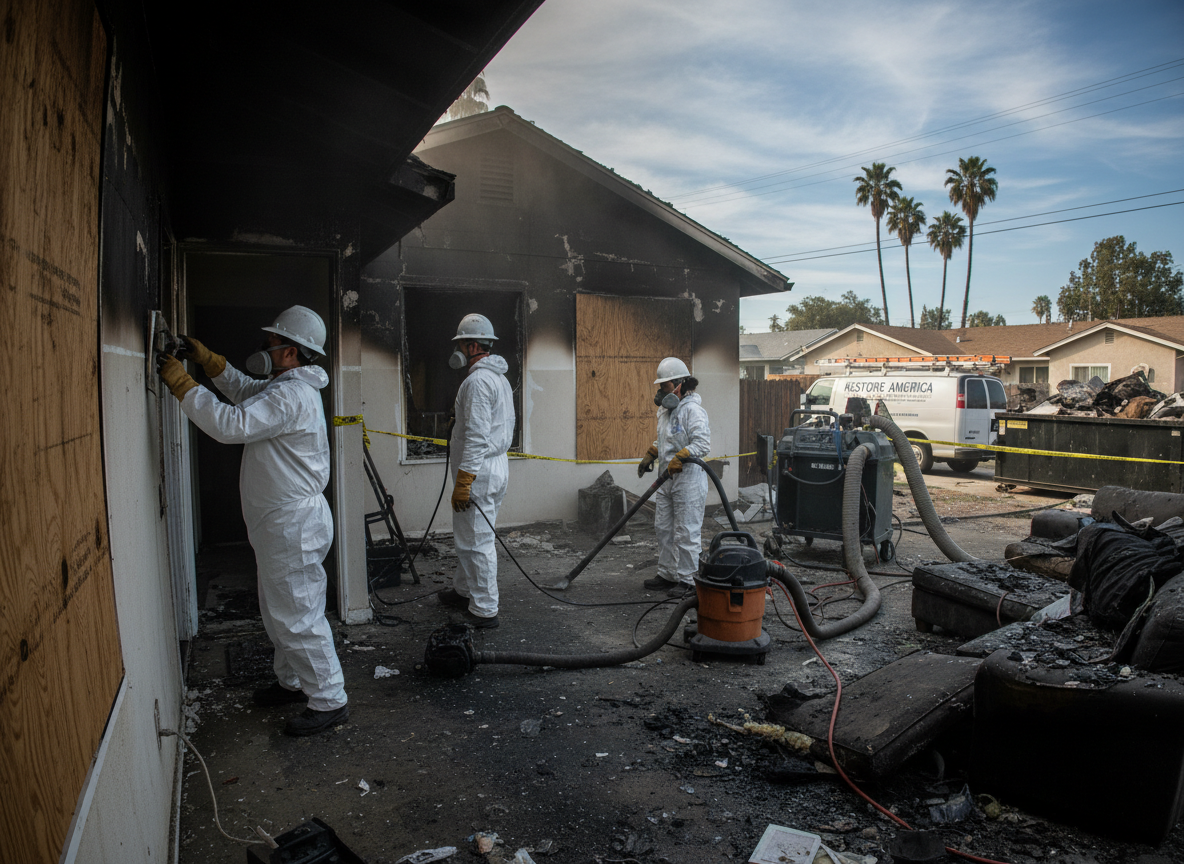
Midway City homes built before the 1970s often feature stucco exteriors and lath-and-plaster interiors that trap smoke particles deep in wall cavities. The region’s mild Mediterranean climate keeps humidity low most of the year, so soot remains dry and airborne longer during cleanup, requiring negative-air machines and HEPA filtration to prevent redistribution into adjacent rooms in Westminster or Garden Grove. Technicians must also account for seismic retrofitting codes when opening walls, because many properties sit on older foundations that complicate access.
After a fire, charred framing in these single-story ranch houses can hide moisture from suppression water that later triggers mold along the slab edges common in Midway City. Restoration crews test for hidden water with moisture meters before sealing cavities, then use antimicrobial rinses rated for the local soil conditions that can carry salts into the structure. Odor neutralization follows with thermal fogging matched to the Mediterranean airflow patterns that move air through attic vents year-round.
Final clearance in Orange County requires documentation that meets local building department standards for Midway City addresses. Crews document every layer removed and replaced so homeowners can show inspectors the work performed on properties near Beach Boulevard. This step prevents delays when selling or refinancing after the loss.
Technician insight
In Midway City the thing that catches most people out with fire damage restoration near me is how the dry Mediterranean climate lets fine soot travel through the unsealed stucco and plaster walls typical of homes along Beach Blvd, so what looks like a small kitchen fire often requires opening ceilings in rooms two doors away.
Attic Fire Spread in Midway City Home
A contained attic fire sent smoke through ceiling joists into living areas. Inspection found soot lodged in the original plaster and HVAC ducts of a 1960s ranch near Westminster. Crews isolated the system, cleaned cavities with HEPA equipment, dried incidental water from suppression, and restored finishes so the home passed final clearance without further issues.
How it works
- 1
Initial Assessment
Technicians arrive within hours, document all affected rooms, test for hidden smoke in HVAC systems, and note any water intrusion from suppression efforts.
- 2
Containment and Safety
Plastic barriers and negative pressure isolate the work zone while crews remove hazardous debris and secure the structure against weather.
- 3
Soot and Odor Removal
HEPA vacuums, chemical sponges, and thermal fogging clean surfaces and neutralize odors that linger in older plaster and stucco.
- 4
Drying and Repairs
Moisture meters guide drying of any water-damaged areas before framing, drywall, and finishes are restored to match existing construction.
Pricing
Upfront written estimates after inspection; final cost depends on square footage affected, depth of smoke penetration, and any hidden water damage.