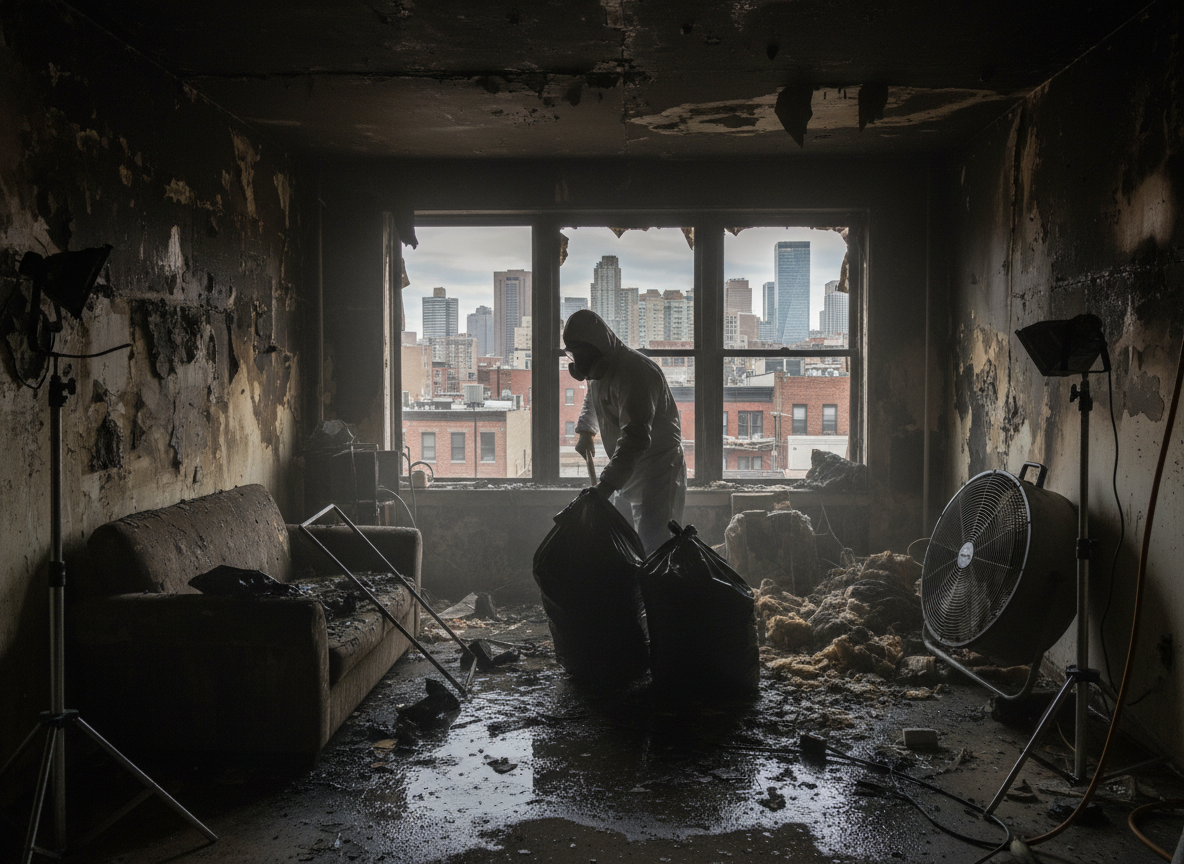
Midway City apartments built in the 1950s and 1960s often feature plaster-over-lath walls and shared HVAC runs that allow smoke to travel between units. After a fire, acidic soot settles on these surfaces and can etch metal fixtures and discolor vinyl flooring within days if not neutralized. Our crews begin with negative-air containment to keep particulates from migrating into unaffected units while we test pH levels on every surface before applying alkaline cleaners.
The mild Mediterranean climate here keeps outdoor humidity low most of the year, which actually helps drying but also means dry smoke residues become airborne again during normal foot traffic. We use specialized HEPA air scrubbers and thermal fogging to reach behind baseboards and inside electrical boxes where residents in Garden Grove and Westminster report lingering odors for months after DIY attempts. Every job includes documentation of pre-existing water damage from suppression efforts so insurance adjusters see the full scope.
Shared walls in Midway City complexes require us to coordinate with property managers before cutting access panels, and we always verify fire-rated assemblies are restored to code before final clearance testing. Older electrical systems common in these buildings can hide melted wiring that only shows up after we remove damaged drywall, preventing future shorts once power is restored.
Technician insight
In Midway City the thing that catches most people out with Apartment fire cleanup is how the mild Mediterranean climate keeps humidity low yet the older 1960s apartment stock has plaster walls that hold soot so deeply that normal wiping just pushes it into the surface.
Shared-wall smoke migration in a Midway City complex
A kitchen fire in one unit sent smoke through the shared HVAC chase into three neighboring apartments. We found acidic soot on plaster walls and inside return ducts. Negative-air containment and targeted alkaline cleaning removed residues without disturbing fire-rated separations, and thermal fogging cleared the odor from all four units.
How it works
- 1
Site Assessment and Containment
We inspect all affected units and common areas, set up physical barriers, and establish negative pressure to stop soot migration into neighboring apartments.
- 2
Soot Removal and Surface Cleaning
Technicians remove loose soot with HEPA vacuums then apply pH-appropriate cleaners to walls, ceilings, and fixtures without damaging original plaster or tile.
- 3
Odor Neutralization
Thermal fogging and ozone treatment reach inside HVAC ducts and wall cavities common in Midway City buildings to eliminate embedded smoke smell.
- 4
Final Clearance and Documentation
Air quality testing and visual inspection confirm the space meets habitability standards before we provide a detailed report for insurance.
Pricing
Cost depends on square footage affected, number of units involved, and whether HVAC systems require full cleaning; we provide upfront quotes after on-site assessment.